
The Siphoning of Creativity
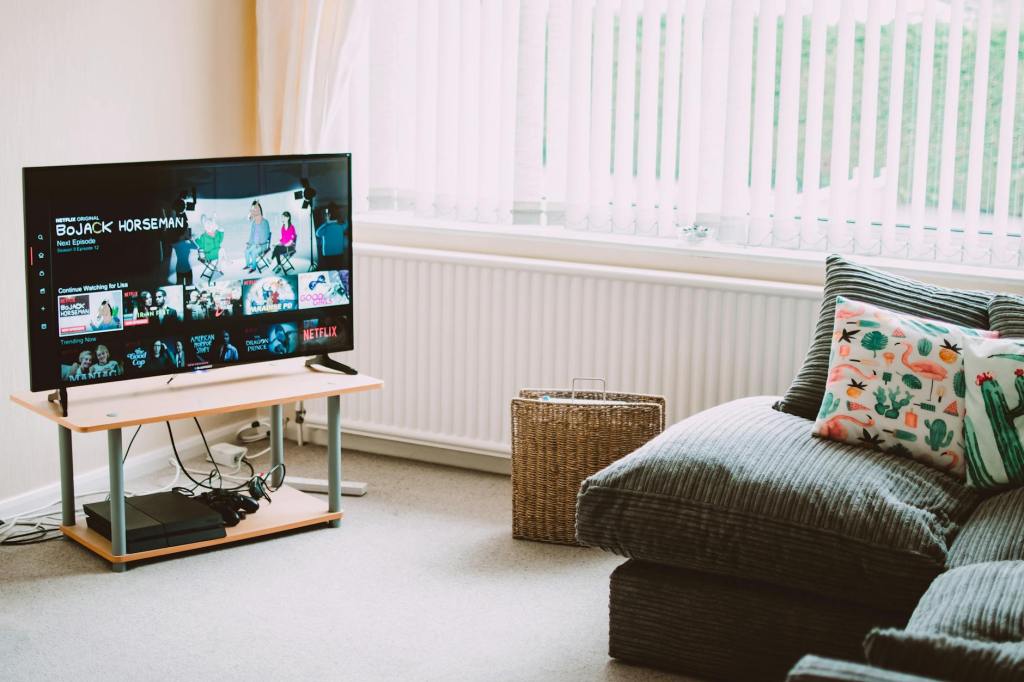
One day my TV quit its job. I didn’t really watch it anyway, it was just on as familiar background noise as I worked from home.
I tried to get the TV to work by going into the settings to troubleshoot the issue. The troubleshooting message said there was no internet connection, yet every other device in the house had connection. “Maybe this is just supposed to be a quiet day” I said to myself and continued on.
My workday was surprisingly more productive than usual. A project I had been putting off for weeks was somehow 75% completed on this random day of no background noise.
The following day I tried to get the TV to work again. It still said no network connection. And again, all other devices still had connection. This would just be day 2 of working without the background noise of my pretend friends. The work project that was started on the first day with no TV was now 100% complete and submitted with time to spare. I used this spare time to revisit a book I had been working on for the past few months.
In hindsight, I had been trying to write the book for years . It took forever just to decide to write it in the first place. Then the subject matter changed about 18 times. First it was a book about journaling, then it was a book about healing. Then it was a book about how I journaled my way to healing, then how I healed my way to journaling. It went from a book to a journal to a book/journal combo to a screw it I quit.
Yet the thought of the book lingered in my mind relentlessly. Now that the TV was out, I had more time to actually write the book vs. thinking about writing the book.
The night the TV quit its job, I started writing. No matter what, I just wrote. I didn’t care what the book was about or who would be offended by my topics. I didn’t care if I felt qualified to say the things I would say because people write whatever they want all the time. Whenever I encountered a reluctance to say what I wanted, I started the sentence with “I am reluctant to write this because” and kept going. I committed myself to writing every single day.
Then something really crazy happened. A book began to form. The subject matter took care of itself as it flowed from word to word, then sentence to sentence.
Then I realized that this book had been forming itself since birth. The book was my chance to tell a story to myself, offer it as a gift of reconciliation and to be released from its bondage. The book was a chance to share what I’ve learned and move into a different story.
I then turned my attention to my beloved yet long-neglected blog.
Though proud of the content, I was inconsistent with the blog. It wasn’t as clearly defined and focused for success as it could have been (but then again neither was I). So eventually the blog turned into a natural product business (no idea), to a jewelry business, to a consulting business, to an online clothing business, to another consulting business, to infinity. Somewhere in this madness I managed to write a book that I wasn’t 100% proud of. I also wrote a book of poetry and a couple of journals, almost as side notes. This was my way of proving to myself that I was still a writer among all of my other ventures.
The natural product business eventually came to a close. When the jewelry and clothing businesses started taking over the space in my home, I said enough. I don’t even wear jewelry like that and I could literally survive on 20 or less clothing items. I shut it all down.
Getting rid of everything I had accumulated for my various businesses made me feel both free and sad. I felt free because my physical space was back and the atmosphere felt calmer. I felt sad because I had failed another business.
Not only had I failed, I had run out of businesses to start. I had no desire to do anything else. So I went awhile doing nothing except working and raising kids.
Somewhere in the space of doing nothing I started writing again. It started as writing in my private journals, but then the desire grew to share my words with others. The writings were so inspiring that I knew they were beyond me. I knew that if I kept my channels open through personal healing and spiritual connection that the material would never run out. This worked for me.
I eventually restarted my blog, but this time I didn’t care if anyone ever read a word. I just wanted to free these words residing inside of me into the atmosphere. Even if no-one ever read it, at least I was able to prove to myself that I could be consistent. At least I was adding something I loved to the fabric of society.
I was glad my TV quit it’s job. Now I could continue with mine.
Mental Siphons
The mind is a master illusionist. It causes you to think you are more productive than you actually are. It sets subliminal siphons that allow you to feel accomplished inside sedentary activities such as waiting for the right moment to get started. Next thing you know you’re 99 and on hospice care wondering where the time went. Enough.
It is time to make mature choices that lead to tangible results, but first we must know our enemies of success. We must identify our uniquely designed mental siphons then make the choice to not fall for them.
Here are a few of my personal mental siphons:
Trap 1- Overthinking/Under-doing. If you ever want a picture of someone who can plan or strategize the hell out of something, please see the author photo. I spent months outlining, strategizing and planning what to write about, how to format it, how to integrate this and that, etc. I got so mixed up that eventually I thought it was not meant for me to write anything at all. Then I remembered that planning and strategizing are not my main focus. Writing is. Once I began the task of writing actual words and sentences, the rest began to unfold with ease. Within 3 short days of consistent writing, I began to understand my assignment with greater clarity.
Overthinking and under-doing may be especially trapping for those of us who have perfectionist personalities. We prefer to let it sit there and rot forever over doing it wrong. For us it is either pristine or it does not exist. But there comes a time when we want to contribute to something higher than ourselves, and we have to question if our seat of perfection is worth the withholding of our natural talents. Here are a few ideas to help launch from our Type-A lines in the sand:
- Acknowledge our fears. Behind every desire to be perfect is the fear of ridicule. This fear keeps us trapped and hidden. Most people do not want to be ridiculed, so the fear is valid. But it is not valid enough to overtake our lives and keep us in a shrunken position. So do it and be scared. You can do both.
- Be grateful for your gift. Someone else wishes they could translate a feeling or an atmosphere into a beautiful painting the way you can. It comes as first nature to you, but it does not for most, so your “flop” is likely the greatest thing most of us have ever seen. What better way to express gratitude for a unique gift than to share it with others.
- Let’s just see what happens. We live in a time when anyone can say or do whatever they please. Anyone with a phone can start a video blog. A musician can self-produce an album and make it available on all music platforms. A writer can self-publish a book and make it available for global distribution. These actions were gated in the past, but they are open to us now as alternative means to make our ideas widespread. Let’s take advantage of this large pool of creative autonomy and see what happens.
Trap 2- Talking it Down. There seems to be this invisible yet unbearably loud voice that sits on my shoulder and listens to every word I say inside of my brain. Not only is this nosy little eavesdropper constantly criticizing my every word choice or sentence structure, it is also taking notes for later. And by later, I mean in the middle of the night when I’m rolling over in my sleep. “Maybe you shouldn’t include that one sentence- someone may take it the wrong way” it says. “Maybe you should remove that one paragraph and save it for something else” it says. Of course editing is a major part of writing the book, but if I listen to this voice in the writing phase, there will be no book. Soon every word of the book will be total nonsense and relegated to the dumpster.
When we were about 4 or 5 years old, we would create the biggest, messiest thing possible and present it to our parents as though it were a framed, museum-quality work of art. We didn’t care if stuff was falling off or if something was upside down or if the glue was still wet. We just made it, and we had fun doing it.
This is the heart of the creative process. This is knowing that what we have just created is an absolute original work of art, and we don’t hold back in its presentation. There is no room for talking it down, because we know for sure that we are creating the best thing ever in existence. I challenge us to channel this space of child-like creative genius as we endeavor into current and next projects.
Trap 3- Later. I think of “later” as an overlap from the overthinking/under-doing mind trap. As long as I was planning to do something, it counted towards the actual doing. This could be true, except my timeline of actually doing the thing was always “later”. I will do this now and that later. Except the “doing it now” part was also planned for later, because I was only theorizing doing it.
Imagine you are in the hiring process and you ask the recruiter when your first paycheck will be deposited into your account. Instead of telling you it will be deposited every other Friday by 9am, he says it will be deposited later. Would you even continue with the hiring process, or would you find another job that actually plans to pay you for your labor?
So new rule of thumb: if the timeline does not exist on a watch, calendar or moon phase, it does not exist. Planning to do something later is just a trap that the mind uses to trick you into thinking you are accomplishing something. You are not.
Trap 4- Ghosts of Programming Past. In my early 20s, I started working in the medical field as a nursing assistant. I used to look at the nurses in awe, thinking how smart they must be to actually become a nurse. I even said out loud to one of them “I would love to be a nurse but I’m not sure I am smart enough to pass the math and biology courses”.
It pains me to admit that these words came from my mouth, but that is what I believed at the time. I even convinced myself (and the college admitting staff) that I needed to take remedial math before I could start the nursing courses. Although I went on to obtain my bachelor’s degree in nursing with a 3.4 gpa and work in nursing at the executive level, there were always parts of me that thought I would be found out for not being good enough. For not being smart enough.
Even though writing comes to me much easier than nursing ever has, still linger the whispers of not being smart enough or good enough to write anything of value. I don’t believe those whispers anymore, but they are there just waiting to catch me off guard as I round a random mental corner.
Maybe your ghost says that you aren’t smart enough. Maybe it says you’re too old. Maybe it says what you’re thinking of doing or creating is idiotic. I say make that ghost prove it.
Channel a time when you were the smartest person in the room, then expand your evidence by writing the smartest article anyone has ever read. Recall a time when you ran circles around someone younger than you, then use that youthful energy to create a masterpiece that rivals the genius of Van Gogh. Go back 30 years if you must, but search the corners of your being and find the contradictory evidence waiting to propel you forward. Then tell that ghost to piss off.
Trap 5- Dodging the Main Issue. I went through many entrepreneurial endeavors before allowing myself to sit still long enough to hear what my soul had been trying to tell me for years. Perhaps it was an intentional dodging for fear of writing the truth as I believe it. Maybe I could not see a way to profit from writing. I don’t know for sure why I dodged writing for so long and it doesn’t matter. As soon as I sat still, the main issue was there waiting patiently for my attention.
The main issue is that there was something I needed to do that extended beyond myself and my personal gains. I don’t know if my book will ever sell a single copy, and I don’t care. The blog that I hold so dear may never take off the way I want. So be it. It is too much for me to think of an outcome. There are ideas that need to be expressed from my unique verbiage and point of view, and I accept my mission.
It is difficult to admit that perhaps the main issue is dodged because it does not bring attention and glory. It is hard to do things that don’t immediately (if ever) bring visible results. Many of us who are called may never reach a platform of fame and fortune from a societal standpoint, yet we change the world with the cultivation of our unique energies. Our spirits speak to us, and we carry the message forward to those who need to hear. There may be one person who needs to read our words or hear our music, and that person may change the world.
It is also difficult to admit that perhaps the main issue is dodged for fear of success. Success can usher in a new level of worry. Where we were once worried that we were not good enough, success makes us worry if we can sustain our new fortune. We can think of these valid concerns, but we cannot allow them to deter us from our destined paths.
The mind siphons are infinite, and they shift to fit into our lives by any means. They could show up as rationalizing, blaming others or self-shaming to name a few.
Distraction Siphons
A former coworker once said there is no such thing as neutral energy. The people/activities in our lives either work for us (positive energy) or against us (negative energy). Her words came rushing back into my awareness as I now progressed through my projects with seemingly lightening speed.
I had always though of my TV as my daytime coworker. It was a way to break the silence, to make me feel less alone while working from home. In reality it was a huge distraction. It allowed me to apply the “later” rule to the things I needed to work on and replaced my creativity with meaningless noise. This realization of my TV as a negative energy during creative hours attracted other negative energies that needed to be disrupted. Here are the other distraction siphons that were subsequently put in check:
- Social media. Social media has its usefulness, but it is easily over consumed. Much of social media is designed to resemble the trappings of the gambling industry, providing us with “free” dopamine hits. In reality, the cost of over-consumption is the loss of unique creativity and decreased attention spans. We become reliant on social media to give us the things we could be creating for ourselves, such as organic human connections. We default to social media when we are bored, sad, or depressed, hoping to find the fulfillment that will forever elude us on these platforms. Building strategies to contain social media usage puts us back in control of the use of our energy. Our time (and minds) become free to explore organic fulfillment that leads to lasting joy.
- Phone games. Perhaps saving the King from another unfathomable circumstance is less important than saving our own gifts of creativity. These games can be fun, but they become endlessly trapping, requiring more downloads, more energy, and more of our precious time. Setting a limit on the number of games we download and their playing times leaves room for the development of our own ideas and hobbies. The King will never be saved, but our creativity can be.
- Low-vibrational people and conversations. Participating in gossip and complaint-based conversations provides direct access to the energy that could otherwise be used to build something creative and useful. It is our right to decline participation in draining conversations that uselessly siphon our energy. We are better served by conversations that lead to quality outcomes than ones that spread gossip and complaints. We can guide these conversations by interjecting empowering questions, such as “What steps are we prepared to take to make things better” or “How can I help redirect this situation into a positive?”. Those who really want to collaborate on a positive outcome will answer the call to action. Those who just want to gossip will say you’ve changed and eventually stop calling.
- Unnecessary actions. Before we spring into action on behalf of someone else’s crisis, we should ask ourselves if this is the best use of our energy. Allowing a child to receive a lesser grade because she left her homework at home again instead of running to the homework rescue gives her the chance to learn a lesson in self-accountability. Listening to your uncle vent for 2 hours about running out of gas on the highway for the third time this month turns your creative energy into a mental dumping ground. Try shifting your goal to being the hero of your own energy and the savior of your own creativity. It is a liberating experience.
The return to focusing on personal creativity opens doors to opportunities that are awaiting our arrival. Challenge the siphoning energies around you one at a time and watch as things unfold in your favor.
Resources:
The War of Art
 Breathe.Gratitude.Love.
Leave a comment